 Of
all the excavations in Armenia, that at Metsamor continues to amaze archeologists.
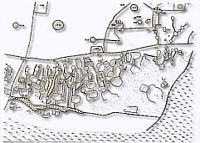
The capital of the Metsamor Kingdom, Metsamor was a large urban settlement
which originally occupied a mound covering 10.5 hectares (26 acres) and
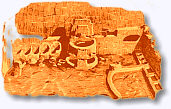
consisted of a citadel within inner cyclopic stone walls and an observatory.
The fortress further encompassed a series of oval shaped dwellings with
adjacent out buildings.
Of
all the excavations in Armenia, that at Metsamor continues to amaze archeologists.
The capital of the Metsamor Kingdom, Metsamor was a large urban settlement
which originally occupied a mound covering 10.5 hectares (26 acres) and
consisted of a citadel within inner cyclopic stone walls and an observatory.
The fortress further encompassed a series of oval shaped dwellings with
adjacent out buildings.
Metal processing at Metsamor was among the most sophisticated of its kind at that time: the foundry extracted and processed high-grade gold, copper, several types of bronze, manganese, zinc, strychnine, mercury and later, iron. Metsamor’s processed metal was coveted by all nearby cultures, and found its way to Egypt, Central Asia and China.
 During
the Middle Bronze Period (late 3rd to mid 2nd millennium bce) there was
a surge of urban growth which extended the boundaries of the settlement
to the area below the hill. By the 11th c. bce the central city
occupied the lowlands stretching to Lake Akna, and covered 100 hectares
(247 acres). About 500 meters southeast of the citadel is the location
of the traditional necropolis (town dwellings), which covered an additional
100 hectares of land. With a population of 50-75,000 Metsamor rivaled
in size the largest cities in the world at that time.
During
the Middle Bronze Period (late 3rd to mid 2nd millennium bce) there was
a surge of urban growth which extended the boundaries of the settlement
to the area below the hill. By the 11th c. bce the central city
occupied the lowlands stretching to Lake Akna, and covered 100 hectares
(247 acres). About 500 meters southeast of the citadel is the location
of the traditional necropolis (town dwellings), which covered an additional
100 hectares of land. With a population of 50-75,000 Metsamor rivaled
in size the largest cities in the world at that time.
 Another
70-80 hectares (170-200 acres) next to the Necropolis comprises the main
burial site, where up to 30,000 bodies were buried in simple graves and
large burial mounds. Those that have been uncovered revealed an
underlying layer of crushed-stone which covered large mausoleums built
from red tufa, encircled by a series of cromlechs (monoliths of arched
stone). What the excavators uncovered in the process was both
a history of Metsamor’s burial rituals and a concern for hiding wealthy
tombs. Like the Pharaohs buried in the Valley of the Kings, Metsamor’s
rulers tried to thwart grave robbers by hiding the locations of
royal tombs. Fortunately the grave robbers at Metsamor were not
as lucky as those in Egypt, and the Mausoleums revealed intact and richly
adorned burial vaults, giving us an excellent glimpse into the traditions
for preparing the body for the afterlife.
Another
70-80 hectares (170-200 acres) next to the Necropolis comprises the main
burial site, where up to 30,000 bodies were buried in simple graves and
large burial mounds. Those that have been uncovered revealed an
underlying layer of crushed-stone which covered large mausoleums built
from red tufa, encircled by a series of cromlechs (monoliths of arched
stone). What the excavators uncovered in the process was both
a history of Metsamor’s burial rituals and a concern for hiding wealthy
tombs. Like the Pharaohs buried in the Valley of the Kings, Metsamor’s
rulers tried to thwart grave robbers by hiding the locations of
royal tombs. Fortunately the grave robbers at Metsamor were not
as lucky as those in Egypt, and the Mausoleums revealed intact and richly
adorned burial vaults, giving us an excellent glimpse into the traditions
for preparing the body for the afterlife.
