The Christian Kingdom
Arabs, Bagratunis, Siunik and Division
Tour Armenia
THE ARABS THE BAGRATUNIS THE SIUNIK KINGDOM BREAKUP OF THE ALLIANCE
Arabs
In 640 Arabs swarmed from the south, destroyed the Sassanids in Persia and began conquering Armenia and much of Asia Minor. In 652 the Armenian general Theodore Rshtuni was forced to recognize Arab suzerainty. With resumption of war between Byzantium and the Arabs, towns and provinces passed between rival empires, complicated further by dissension among Armenian lords, some of whom favored the Byzantines, while others favored the Arabs, who at first had seemed more liberal masters than the Greeks.
Arab rule became more oppressive when the Abbasids overthrew the Umayyad dynasty and Armenians revolted against the Arab rule in 774-5. The revolts were ruthlessly repressed. The devastation wrought by the Arabs was terrible, followed by a mass exodus into Byzantium, and the repopulating of deserted lands with Arab immigrants. From this period onward monasteries and churches began to be erected in more remote areas, many on almost impassable mountain paths, crevices and canyons.
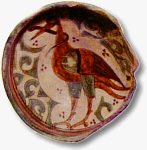
The Arab influence on culture was noticeable: a decorative style of art and design entered the manuscript illuminations, and frescoes became more elaborate, using more floral and ornamental decoration. Not much is written about this period, but it is known that the Arabs were fairly tolerant to the Christian church, as long as it did not try and usurp their political authority. Still, manuscripts record repeated incursions by Arab armies and devastating destruction to monasteries, churches and cities. One of the key populations to suffer the most from Arab dominance was manuscript writers, illumination painters, and teachers. Dominance over the Armenian culture was as important a battle as political dominance.
The Bagratunis
 Following revolts and uprisings by Georgians and Armenians in 851, and a victorious campaign by Byzantine armies, the Arabs adopted more conciliatory policies towards the Armenians. This led to the appointment of Ashot Bagratuni (the Carnivorous) in 861, as Prince over Armenia, beginning a long period of eminence for his family (The Bagratid Dynasty). The Bagratunis had not participated in the revolt of 774-5, and so had retained their lands and position as the leading feudal family at the time. Following revolts and uprisings by Georgians and Armenians in 851, and a victorious campaign by Byzantine armies, the Arabs adopted more conciliatory policies towards the Armenians. This led to the appointment of Ashot Bagratuni (the Carnivorous) in 861, as Prince over Armenia, beginning a long period of eminence for his family (The Bagratid Dynasty). The Bagratunis had not participated in the revolt of 774-5, and so had retained their lands and position as the leading feudal family at the time.
The Bagratuni Kings
Ashot established his son, Ashot I the Great as prince over Iveria, in present day Georgia. From then on the Bagratunis gradually enlarged their possessions and their domains extended from Taron in the southwest of Armenia to the provinces of Shirak and Arsharunik in the north. After being appointed Prince of princes, Ashot further strengthened his position. When the head of the Mamikonian family died, he took possession of the province of Bagrevand, and he forged alliances with the Artsruni's of Vaspurikan and the lords of the eastern provinces of Siunik. In 885-86, he was elected king of Armenia. The caliph confirmed this election and sent a crown, though he still considered the country a vassal state. Carefully avoiding taking sides in the war between the Arabs and Byzantines, he received a crown from Emperor Basil I, himself an Armenian.
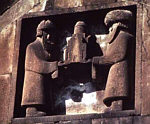 Ashot's son Smbat (890-914), was not as astute in politics as his father, ceding the city of Nakhichevan--belonging to the rival Artsruni's of Vaspurikan-- to the prince of Siunik. Incensed, Gagik Artsruni solicited the help of Yusuf, the Emir of Azerbaijan, an avowed enemy of Smbat. The caliph--delighting in the dissension, further provoked the situation by giving the crown to Gagik Artsruni, and the region of vaspurikan became a separate kingdom, the first of several created in this century. Yusuf and Gagik joined forces and defeated the royal armies in 914. Yusuf tortured and killed Smbat, and sent the body to Dvin to be nailed to a cross. Yusuf set about destroying the Bagratid kingdom, and were it not for the ascension of Smbat's son Ashot II, he might have succeeded. Gagik withdrew his alliance with Yusuf, Byzantium accepted the new king and sent aid, and the Arabs were forced to withdraw. Ashot's son Smbat (890-914), was not as astute in politics as his father, ceding the city of Nakhichevan--belonging to the rival Artsruni's of Vaspurikan-- to the prince of Siunik. Incensed, Gagik Artsruni solicited the help of Yusuf, the Emir of Azerbaijan, an avowed enemy of Smbat. The caliph--delighting in the dissension, further provoked the situation by giving the crown to Gagik Artsruni, and the region of vaspurikan became a separate kingdom, the first of several created in this century. Yusuf and Gagik joined forces and defeated the royal armies in 914. Yusuf tortured and killed Smbat, and sent the body to Dvin to be nailed to a cross. Yusuf set about destroying the Bagratid kingdom, and were it not for the ascension of Smbat's son Ashot II, he might have succeeded. Gagik withdrew his alliance with Yusuf, Byzantium accepted the new king and sent aid, and the Arabs were forced to withdraw.
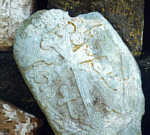
This began a renewed period of cultural development, including churches, monasteries and a flourishing of manuscript art, which--though begun as early as the 5th c. CE--achieved new levels of artistry. Resumption of international trade brought prosperity and the revival of artistic and literary pursuits. Hundreds of monasteries and churches, as well as thousands of exquisitely carved stone crosses (Khachkars) are traced to this period. The churches assumed their conical domed cruciform shapes, with elaborate carved images on the facades and frescoes in the inner sanctums. The capital city of Ani grew to a population of almost 100,000, more than any urban center in Europe. Religious life flourished and Ani became known as the "city of one thousand and one churches”.
It was in Ani, during the peak of the Bagratuni rule, that original studies on problems of pathology, therapy and pharmacology, so called "bzheshkaran's" (medical books) first appeared. Unfortunately time has not preserved for us the author's name of the famous "Bzheshkaran" which was written during the rule of the victorious king Gagik (990-1020) of the Ani Bagratuni dynasty. Later it was edited in Cilician Armenia and was called "Gagik-Hetumian bzheshkaran".
The Siunik Kingdom
 The Bagratid Empire stretched West and North, but in the South of Armenia, other royal families rose to ascendancy. Fractured by Arab invasions, Armenian lands were subdivided under ruling Armenian houses which cooperated or fought each other as much they did outside powers. Other kingdoms emerged, as the Bagratids and Artsruni's divided and subdivided their lands between sons and brothers. Another small kingdom was that led by the Zagikian (Zakarian) family, which rose to prominence in the end of the 9th century, creating the Siunik Kingdom. Like other princely families, the Zagikian family paid nominal homage to the Bagratuni’s and Arabs, but remained fairly autonomous. The Bagratid Empire stretched West and North, but in the South of Armenia, other royal families rose to ascendancy. Fractured by Arab invasions, Armenian lands were subdivided under ruling Armenian houses which cooperated or fought each other as much they did outside powers. Other kingdoms emerged, as the Bagratids and Artsruni's divided and subdivided their lands between sons and brothers. Another small kingdom was that led by the Zagikian (Zakarian) family, which rose to prominence in the end of the 9th century, creating the Siunik Kingdom. Like other princely families, the Zagikian family paid nominal homage to the Bagratuni’s and Arabs, but remained fairly autonomous.
By the end of Bagratid rule, what remained of the royal domain was divided between two brothers, Ashot IV and John-Smbat III. In 968 the kingdom of Vaspurikan was divided between three brothers. To this list is added, at the end of the 9th century, the principality of Taron, and the Siunik kingdom with its capital at of Kapan. On the road from Aghvank, Aterpatakan (Azerbaijan), Dvin and Ani, Kapan was an important trade center. With rich deposits of copper, gold and other minerals, Kapan was also an important center for metal working. The city was re-erected on order of Prince Zagik G (Zagik III), the son of Jevanshir. Closer to the Persian lands, yet fiercely resistant to cultural inroads, the Siunik Kingdom of the 9th-11th cc built some of the most complete examples of the Romanesque form, with little of the Persian and Arab influences in design found in other parts of the country.
Despite divisions, the 10th and early 11th centuries were mostly peaceful and prosperous ones. The Abbasid rulers to the South were locked in conflict with Byzantine armies, and unable to seriously interfere in Armenia. Local emirs accepted the Bagratunis, and invasions by neighboring Muslim dynasties had no lasting effects.
Breakup of the Alliance
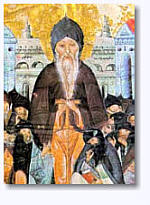 Internally, it was another matter, as the nobility and ruling class absorbed small holdings, reducing peasants to serfdom. There were a number of popular uprisings, in particular in Siunik, where the wealthy monastery and university at Tatev had acquired a number of villages. The peasants revolted, and it took armed intervention by the king of Siunik to subdue the peasants. Other revolts broke out in the country, including several heretical movements challenging the authority of the Catolicos and the Church. Internally, it was another matter, as the nobility and ruling class absorbed small holdings, reducing peasants to serfdom. There were a number of popular uprisings, in particular in Siunik, where the wealthy monastery and university at Tatev had acquired a number of villages. The peasants revolted, and it took armed intervention by the king of Siunik to subdue the peasants. Other revolts broke out in the country, including several heretical movements challenging the authority of the Catolicos and the Church.
The long reign of Gagik I (989-1020) marked the zenith of Bagratid rule. Armenia was at peace and prosperous, and the king embellished his capital Ani with new buildings. Transferred from Dvin in 961, the city grew so rapidly that less than 40 years after the construction of the boundary walls, a second line of fortifications was built, trebling the size of the original city. Palaces and churches were erected, and the population grew to over 100,000, then the largest city in the known world.
Upon Gagik's death, the kingdom rapidly declined, as his sons fought over the kingdom. This was a fatal situation during the time of Byzantium expansion and in the face of new eastern foe, the Seljuk Turks. In 966-67 Byzantium annexed Taron, followed by the Iberian Bagratid David II's Armenian lands and the kingdom of Vaspurikan in 1021-22 (under attack by the Seljuks).
The Bagratid king John Smbat III, fearful of reprisals for his assistance to the Georgian ruler, designated Basil II as his heir. After his death the claims of the Emperor were supported by pro-Byzantine elements in Ani. During the struggle that followed, the Byzantines were repulsed and the young prince Gagik was crowned king in 1042. He fought Byzantium and the emir of Dvin for three years, but was lured to Constantinople and forced to abdicate. Byzantine forces took possession of the city and the rest of the kingdom. All of Eastern and southern Armenia were a part of the Byzantine Empire, when Kars was ceded in 1064. Only Lori and Siunik retained independence.

 Top
Top

|